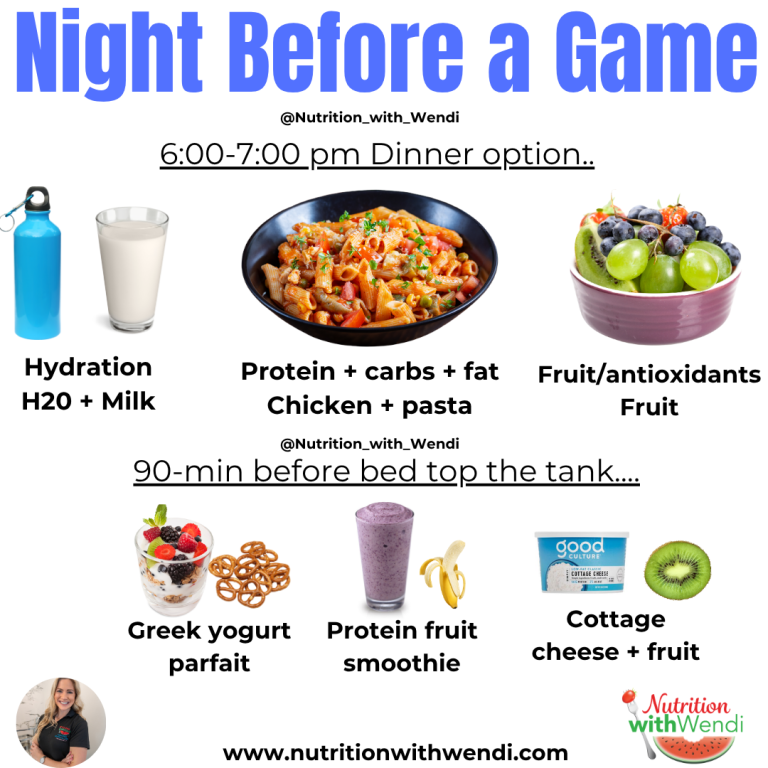
The night before a game, athletes should eat a balanced meal built around lean protein and complex carbohydrates — think grilled chicken, whole-grain pasta or rice, fruit, and vegetables — while avoiding fried, spicy, high-fat, and unfamiliar foods that can cause stomach issues and disrupt sleep. What you eat the night before competition directly affects your energy, focus, and performance the next day.
Most of the athletes we coach do a solid job with nutrition during training and on rest days. Where athletes, parents, and coaches need the most help is pre-game nutrition — both the night before and the day of competition. And believe it or not, proper game day fueling starts DAYS before you compete. Prioritize lean protein and complex carbohydrates all week long, and don’t wait until game day to try to undo several days of poor eating.
Grab the Fuel Her Potential: Female Athlete Playbook — it covers the foundational nutrition principles every female athlete and family should know.
Foods Athletes Should Avoid the Night Before a Game
The most common pre-game nutrition mistakes we see on intense training or competition days include eating:
- Fried foods
- Spicy foods
- New or unfamiliar foods
- High-fat foods
- High-fat or high-fiber foods right before activity
Now let’s cover the five pre-game nutrition rules that will keep you sharp, fueled up, and ready to compete.
 1. Practice Your Pre-Game Meal in Advance
 1. Practice Your Pre-Game Meal in Advance
I can’t stress this enough: no new foods the night before a game or on game day. If you try new foods the night before you compete, you could end up with stomach pain, cramping, or digestion issues during your performance. An unfamiliar meal can also disrupt your sleep and tank your efforts the next day.
Practice the foods and meals you want to eat the night before a game at least a week in advance so you know they work and feel good for you. Fueling the soccer student athlete.
2. Limit High-Fat and High-Fiber Foods Before Competition
Limit oils, high-fiber foods, and fatty cuts of meat. They take longer to digest and can prevent you from properly fueling up with carbohydrates. Too much fiber can also cause GI distress. Have food allergies? No problem! Grab my egg, dairy and nut free fueling guide!
Your goal the night before a game is to fill up your glycogen stores — the storage form of carbohydrates your muscles rely on during competition. Balance your plate with both carbs and protein, and don’t go too heavy on either one. My Athlete Performance Plate method in the Meal and Snack Guide shows you exactly how to build this plate.
3. Skip Fried, Processed, and Spicy Foods
It might taste good, but it will slow you down for the game. Instead, fuel up with a high-quality lean protein source paired with fruit, complex carbohydrates, and veggies. You want a balanced plate containing foods from all food groups. Baseball athletes need plenty of lean protein and carbs the night before a game!
4. Eat a Protein + Carb Bedtime Snack (45–60 Minutes Before Bed)
 4. Eat a Protein + Carb Bedtime Snack (45–60 Minutes Before Bed)
You can’t perform like a beast if you eat like a bird! A small bedtime snack the night before a game helps repair muscle and tops off your fuel tank:
- Casein-rich snacks like cottage cheese, Greek yogurt, or string cheese paired with an apple or banana. Casein is a slow-digesting dairy protein that helps repair and rebuild muscle while you rest.
- A small serving of carbohydrates roughly 45–60 minutes before bed tops off the fuel tank.
- Cherries and bananas support restful sleep. Cherries are a natural source of melatonin, which helps you fall asleep, and bananas provide magnesium, a mineral that aids muscle relaxation.
As always — test these snacks out ahead of time to make sure they sit well with you. You’ll find hundreds more athlete-approved options in my Student Athlete Fueling System.
5. Get 7–9 Hours of Sleep Before Competition
No amount of nutrition can replace poor sleep. Aim for a minimum of 7–9 hours the night before a game. Sleep is when your muscles repair, hormones balance, and your brain locks in the skills you’ve practiced. Nutrition is queen, but sleep is king. How much sleep do athletes need?
9 Pre-Game Meal Ideas for Athletes (Night Before a Game)
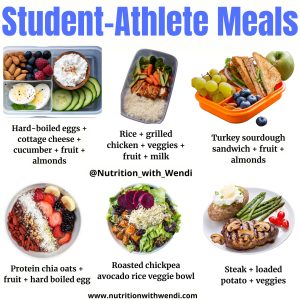 Here are nine balanced pre-game dinner ideas that will fuel you up and have you ready to perform at your best:
- Grilled chicken sandwich on a whole-grain bun with veggies, 1–2 cups whole-grain rice, a mixed berry fruit cup, and low-fat chocolate milk
- Lean ground turkey meatballs with whole-grain pasta, watermelon slices, and ½ cup non-fat Greek yogurt with pineapple
- Deli ham or turkey sub with a side of pretzels, apple slices, and low-fat chocolate milk
- Whole-grain burrito or burrito bowl with lean flank steak, brown rice, grilled veggies, and a small serving of guacamole (keep the fat light)
- Plant-based power plate: grilled tofu, chickpeas, brown rice, tomatoes, mixed greens, a side of grapes, and light dressing with 1–2 whole-grain rolls
- 93% lean ground beef burgers on whole-grain bread or in a pita wrap with a side salad, raspberries, and low-fat milk
- Whole-grain rice bowl with grilled shrimp or lean flank steak, roasted broccoli, diced avocado (keep it light — about 1 tbsp), and fresh fruit
- Roasted sweet potato with lean ground turkey or tofu in a whole-grain wrap with hummus and blueberries
- 1–2 whole-grain chicken wraps with beans, spinach, tomato, mashed hummus, and fruit
Did you catch it the first time? NO NEW FOODS the night before a game or on game day! Grab the Football Fueling Guide
A great way to plan ahead for balanced meals — so you’re not tempted by fast food on busy tournament weeks — is my plate method and “4-2-1” method, both explained inside the Health & Performance Playbook and Meal & Snack Guide.
“Wendi has helped me feel better going into games and camps and has assisted with my weight gain goal. I have gained a solid 10 lbs since we started working together, and I have more energy during practice and training. My muscles aren’t as sore after games either.”
— Ian Ness, HS Hockey Athlete
FAQ: Pre-Game Nutrition for Athletes
What is the best meal to eat the night before a game? A balanced plate of lean protein (grilled chicken, turkey, lean beef, tofu) and complex carbohydrates (whole-grain pasta, brown rice, sweet potato) with fruit and vegetables. Keep fat and fiber moderate so your body can digest the meal and store carbohydrates as fuel.
Is pasta good the night before a game? Yes — whole-grain pasta with a lean protein like turkey meatballs is a classic pre-game meal. It fills your glycogen stores so your muscles have fuel for competition. Skip heavy cream sauces and go easy on the cheese.
What should athletes NOT eat before a game? Avoid fried foods, spicy foods, high-fat foods, heavy sauces and dressings, and any food you’ve never eaten before. These slow digestion and can cause stomach pain, cramping, or GI distress during competition.
Should athletes eat before bed the night before a game? Yes — a small protein + carb snack 45–60 minutes before bed, like Greek yogurt with a banana or cottage cheese with an apple, supports overnight muscle repair and tops off energy stores.
How much sleep do athletes need before a game? A minimum of 7–9 hours. Sleep is essential for muscle recovery, reaction time, and mental focus on game day.
Fuel Right, Play Great
 What you eat the night before a game can make a good athlete great — and a great athlete even better. Practice your meals in advance, build a balanced plate, snack smart before bed, and protect your sleep.
Work With Wendi
→ Grab the Fuel Her Potential: Female Athlete fueling guide!
Strategic guidance for fueling the female athletes! Parents, coaches, and trainers seeking clarity on female athlete fueling and recovery demands!
Grab your copy here
→ Grab the athlete meal and snack fueling guide!
Strategic guidance for athletes, parents, and active adults seeking clarity and results.
Grab your copy here
→ Download the Health & Performance Playbook
Foundational nutrition principles every athlete and family should know.
Get the playbook
→ Team Talks, Workshops, Clinics & Partnerships/Speaking
Professional sports nutrition education for teams, clubs, schools, and organizations.
Inquire about speaking and partnerships HERE.
→ Enroll in the 12-Week Elite Athlete Membership
A structured, step-by-step system for fueling, recovery, and performance consistency.
Join the program
→ Questions and other inquiries for Wendi
Foundational nutrition principles every athlete and family should know.
Get in touch
 Under-fueling without realizing it