
The First Meal of the Day
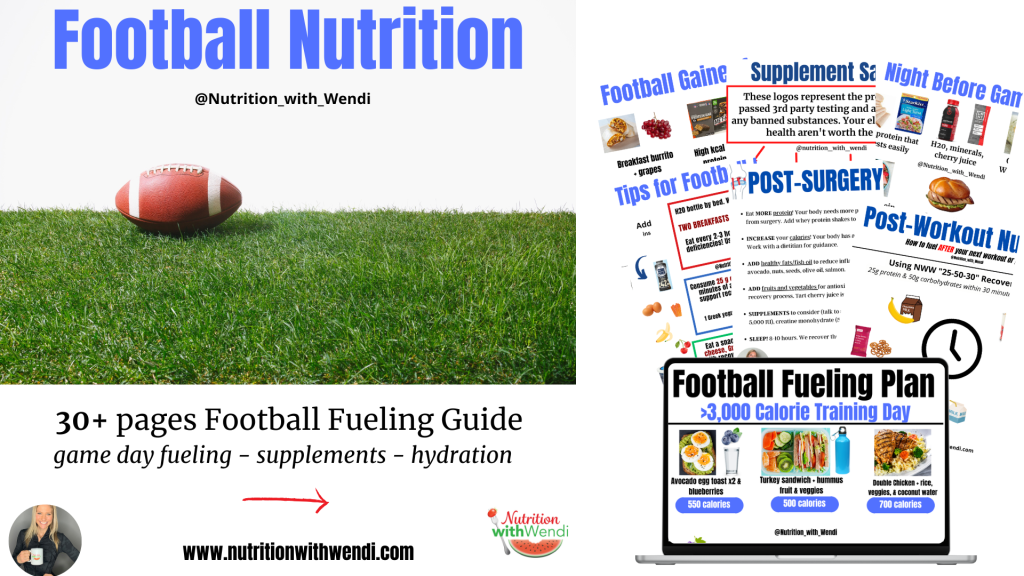
Power up with breakfast within 30 minutes of waking. For football players, this is non-negotiable. After an overnight fast, the body needs fuel to support energy, focus, muscle maintenance, and recovery. Many athletes don’t just need one breakfast—they often require a second breakfast later in the morning to meet their calorie and performance demands.
Athletes who prioritize breakfast consistently demonstrate better energy levels, improved cognitive function, and greater overall performance compared to those who skip it.
Not sure what to make? Check out my Breakfast Ideas for Busy High School Athletes blog!—each recipe is built around protein and produce to set the tone for the day.


Always pack a second breakfast! Especially on game day!
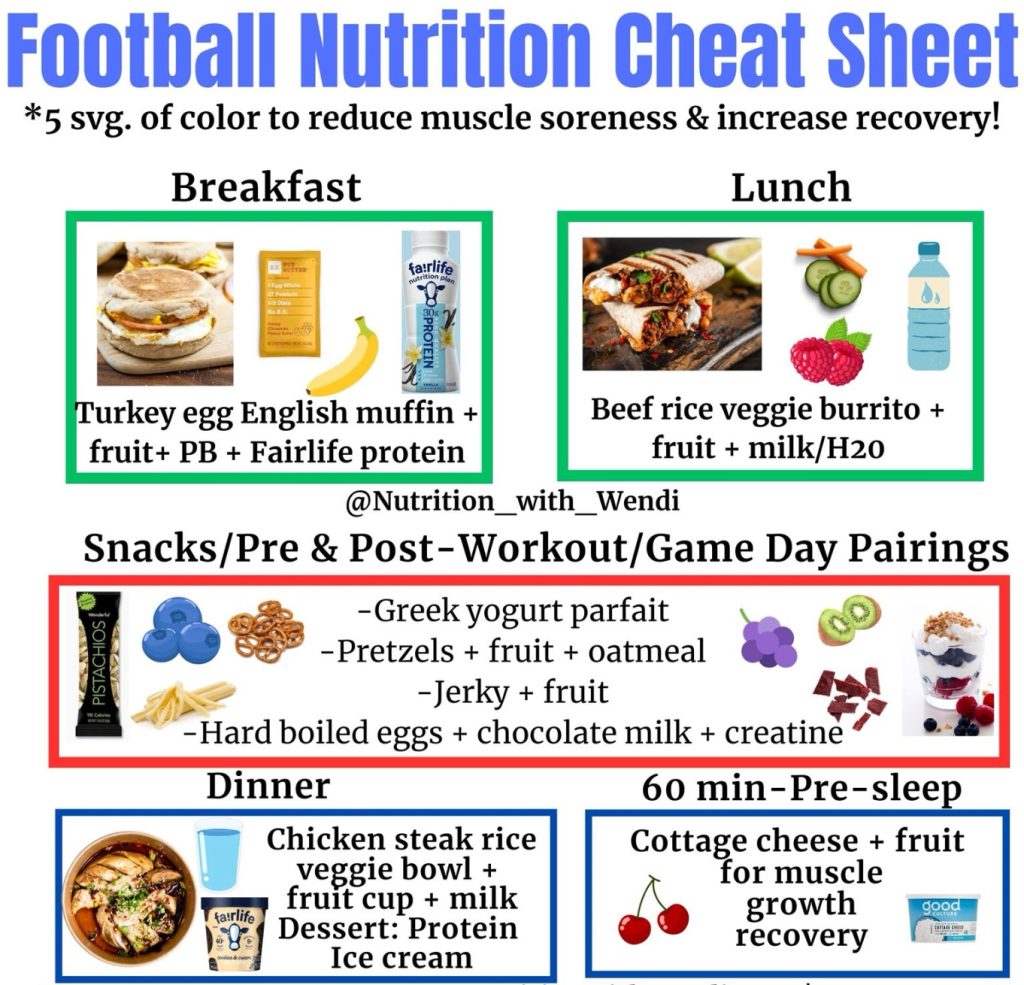
- Hard boiled eggs + apple slices
- Greek yogurt parfait
- Fruit protein smoothie
- Whole grain waffle PB banana sandwich
- Core Power protein shake + orange
- Protein overnight oats
Why does nutrition matter so much? Football carries the highest injury rate of any high school sport, at roughly 3.96 injuries per 1,000 athlete exposures, and sprains and strains account for about 36.8% of all high school sports injuries with concussions at 21.6% (High School RIO surveillance data; American Academy of Orthopaedic Surgeons). Those three categories soft tissue, connective tissue, and head impacts respond to nutrition very differently.
Gameday Fueling
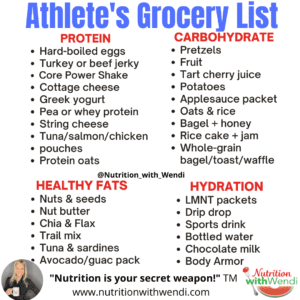
Many athletes wonder, “What should I eat on game day?” Football players prepare for gameday on the field and in the weight room, just as they should prepare in their meal plan and sleep hygiene. The focus for gameday fueling is energy, and the body’s preferred energy source comes from carbohydrates. All meals and snacks should fill up your gas tank with lots of carbohydrates and proteins. Reference The Importance of Carbohydrates for Performance blog for more information on the importance of carbs for athletes, the types of carbs and the foods in which they are found, and the signs your carb intake may be too low.
Depending on the timing of the game, plan your day accordingly to properly fuel your body to perform its best. Utilize the 4-2-1 method to fuel on gameday:
- 4 hours beforehand: Eat a full meal including carbs, proteins, and color.
- 2 hours beforehand: nibble on a snack: Get a little protein and some carbs in a few hours before training or playing.
- 1 hour beforehand: sip on fluid: Support glycogen stores and hydrate.
Recovery Nutrition
Football is one of the most physically demanding sports; therefore, recovery nutrition is key to your success.
Aim for five servings of color (fruits and vegetables) to reduce muscle soreness and increase recovery. NWW also recommends the 25-50-30 rule. Athletes should consume 25-40 grams of protein paired with 50-100 grams of carbohydrates within 30 minutes of activity for reducing muscle breakdown and supporting training adaptations. See the Recovery Tips for Athletes and Active Adults for more recovery strategies.
Tart cherry juice is another recovery nutrition tip supported by research. Tart cherries are loaded with antioxidant anthocyanins, which act to reduce inflammation and share similar properties to non-steroidal anti-inflammatory drugs (NSAIDs) such as ibuprofen. Research has found improvements in fatigue post exercise and attenuated muscle damage and soreness with just 8 ounces of tart cherry juice. Tart cherries also contain melatonin, a phytochemical that is key in sleep regulation. Research has supported consumption of tart cherry juice to increase melatonin levels, translating into improved sleep duration and quality. Try NWW’s Fav Recovery Smoothie to recover like a champion!

Wendi A. Irlbeck, MS, RDN, LD, CISSN
*Book a free call with a NWW sports dietitian
*Get in touch with Wendi for a team talk or partnership
*Enroll in 1:1 coaching or our elite membership
*Download Wendi’s health and performance playbook!
 Under-fueling without realizing it