
In my 10+ years working with youth, collegiate, and masters athletes, I’ve learned something important:
There are three types of athletes.
- Athletes who are prone to cramping
- Athletes who have cramped
- Athletes who will cramp
Muscle cramps are incredibly common in sport. The goal is not necessarily to eliminate them entirely, but to reduce the likelihood, frequency, and severity when they occur. In my coaching program we focus on three key factors that influence cramping:
- Hydration and minerals
- Pre-competition fueling
- Training preparation and warm-up
Let’s break these down.
1. Hydration and Minerals
Many athletes simply do not drink enough fluids throughout the day.
We actually wake up in a mildly dehydrated state, which is why I recommend athletes place a water bottle next to their bed so they can hydrate first thing in the morning.
Hydration is one of the most controllable factors in performance. Most athletes require roughly 80–100 ounces of fluid per day, and this does not include the additional fluids needed during training or competition.
A simple rule I recommend:
- Wake up and drink 10 oz of H20 within 10 min of waking.
- Drink 20 oz of fluid every 2 hours leading up to competition
- Here is a more detailed hydration schedule I have provided for athletes to use as a guide.
But hydration isn’t just about water. Athletes also lose key minerals through sweat, including:
These minerals play critical roles in muscle contraction, nerve signaling, and fluid balance. See my hydration tip sheet for more information.
Potassium Tip
The night before competition, I often recommend ½ an avocado with dinner. Many athletes are surprised to learn:
- One avocado contains 975 mg potassium
- One banana contains 487 mg potassium
That’s nearly double the potassium.
Magnesium and Muscle Function
Magnesium is another important mineral that supports muscle contraction and relaxation. Recommended intake:
- Men: 400–420 mg/day
- Women: 310–320 mg/day
Low magnesium intake may contribute to muscle cramps, fatigue, and poor recovery.
Are You a Heavy Sweater?
- Some athletes lose significantly more sodium in sweat than others.
- A simple way to identify this:
- Check your jersey or hat after training.
- If it’s crusty with salt or heavily drenched, you’re likely a salty sweater and may need additional electrolytes.
- Hot weather and intense training increase these losses even further.
Another helpful rule: For every pound lost during training, replace it with 16–24 oz of fluid. 7 tips for busy athletes to stay hydrated HERE.
2. Pre-Competition Fueling
Another major reason athletes cramp?
Under-fueling. Athletes often underestimate how many carbohydrates and calories they actually need.
Carbohydrates fuel both the brain and working muscles. When blood glucose drops, performance drops. Low-carbohydrate diets also cause the kidneys to excrete more sodium and water, which can further increase cramping risk.
Carbohydrate Recommendations
Athletes typically require:
- 3–5 g carbohydrates/kg body weight/day
Example:
- A 165 lb (75 kg) athlete needs roughly:
- 225–375 grams of carbohydrates per day
Athletes with higher training loads may require:
- 5–7 g/kg/day
That same 165 lb athlete may need:
- 375–525 grams per day
Quality carbohydrate sources include:
- Bagels
- Rice
- Oats
- Potatoes
- Pretzels
- Fruit
- Dates
- Honey
- Whole grains
- Fuel by Momentous. Code WENDI IRLBECK saves you 15% – I recommend this to our athletes for travel, long training sessions or before games for that extra boost of quick carbs!
If you want a simple fueling system athletes can follow daily, download my health and performance playbook!
Glycogen Storage
The human body can store roughly: 400–500 grams of glycogen. That’s about 1,600–2,000 kcal of stored carbohydrate energy.
When glycogen becomes depleted, we often see:
- Reduced strength
- Slower speed
- Reduced muscle contractility
- Increased fatigue
- Higher likelihood of cramping
Get my 40 page football fueling guide HERE.
If Solid Food Is Hard to Eat
Many athletes struggle to eat before competition. I often see this in baseball athletes. Here are nutrition tips for baseball athletes to fuel game day and avoid cramping.
Liquid carbohydrate sources that can help with cramping:
- Sports drinks
- Coconut water
- Tart cherry juice
- Smoothies
For a simple system athletes can follow before games use my refueling blog!
3. Training Preparation and Warm-Up
Cramping isn’t always about electrolytes or hydration. Sometimes it’s about conditioning and training progression. Athletes may cramp if they are:
- Under-trained
- Under-conditioned
- Returning from injury
- New to a sport
- Increasing training too quickly
I see this often in young football players during early season practices.Their bodies simply aren’t adapted yet. Proper training progression and warm-up routines can significantly reduce cramping risk.
Snacks and fluids during halftime or between periods can also help replenish:
- Carbohydrates
- Electrolytes
- Fluids
A Quick Tip for Treating Cramps
Many teams also use pickle juice, vinegar, or mustard to help stop cramps.
This works through a neurological reflex, not just sodium. When spicy, bitter, or acidic tastes hit receptors in the mouth, they stimulate the nervous system and may help reduce the over-excited motor neuron activity that contributes to cramping.
Research by Kevin C. Miller published in Medicine & Science in Sports & Exercise found that pickle juice shortened induced muscle cramps by about 30 seconds compared to water.
The key takeaway: It’s likely the acidic compounds triggering a neural reflex, not simply the sodium.
Final thoughts as a sports dietitian
Muscle cramps are multifactorial. They can be influenced by:
- Dehydration
- Electrolyte imbalances
- Inadequate carbohydrate intake
- Neuromuscular fatigue
- Poor sleep or recovery
- Training load and conditioning
You may not always be able to completely prevent cramps, but with proper hydration, fueling, sleep, and training preparation, you can significantly reduce their likelihood.
In good health, faith, and fitness
 Wendi Irlbeck, MS, RDN, LD, CISSN
Wendi Irlbeck is a registered dietitian nutritionist and performance coach who specializes in evidence-based sports nutrition for high school and collegiate athletes. She designs strategic fueling systems that support performance optimization, recovery, and injury risk reduction, while minimizing health risks associated with under-fueling, overtraining, and misinformation. Wendi partners with parents, coaches, athletic trainers, athletic directors, educators, and sports performance staff to deliver practical nutrition education and sustainable performance-driven lifestyle plans. Her team provides virtual services nationwide, including sports nutrition presentations, 1:1 and group coaching, and structured athlete development programs for families and active adults.
Work With Wendi
→ Book a 1:1 Nutrition Consultation
Strategic guidance for athletes, parents, and active adults seeking clarity and results.
Schedule your consult here
→ Team Talks, Workshops, Clinics & Partnerships/Speaking
Professional sports nutrition education for teams, clubs, schools, and organizations.
Inquire about speaking and partnerships HERE.
→ Elite 12-Week Elite Athlete Membership
A structured, step-by-step system for fueling, recovery, and performance consistency.
Join the program
→ Download the Health & Performance Playbook
Foundational nutrition principles every athlete and family should know.
Get the playbook
→ Questions and other inquiries for Wendi
Foundational nutrition principles every athlete and family should know.
Get in touch
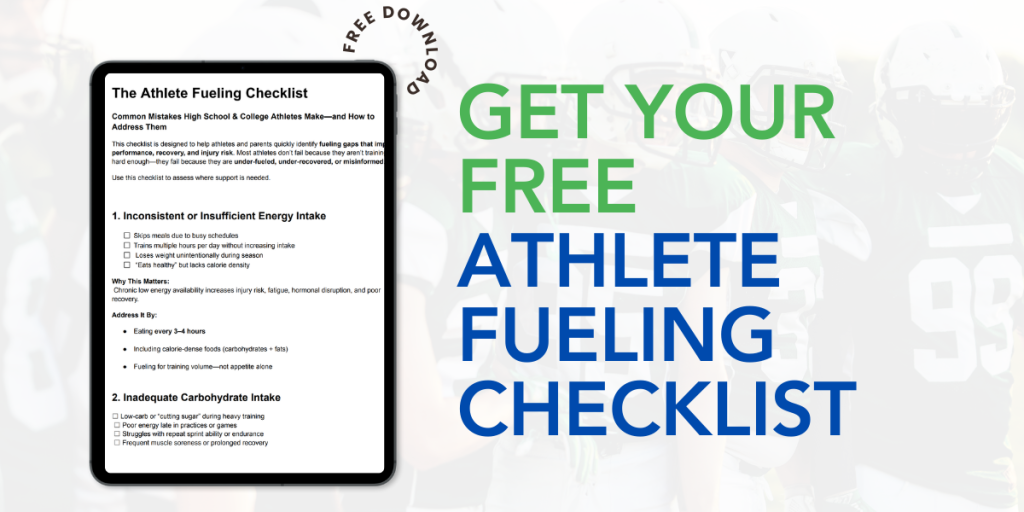
 Under-fueling without realizing it