
Speed. Explosiveness. Precision. Wide receivers are some of the most athletic and dynamic players on the field! A WR’s nutrition must reflect that. The ability to sprint off the line, break away from defenders, and make game-changing plays isn’t just about talent and training, it’s also about fueling smart with the right fuel at the right time in the right amount!
Unfortunately, many wide receivers fall into the trap of underfueling, especially when it comes to carbohydrates and protein. This blog breaks down why that’s a major performance killer—and what a properly fueled day should look like because IT TAKES WHAT IT TAKES!
The Problem: Underfueling is Slowing You Down
Not Enough Carbs or Calories
Carbohydrates are your primary source of energy during high-intensity efforts like sprinting and cutting. Without enough carbs, your body can’t replenish muscle glycogen—your stored fuel source for explosive movements. Rough estimate on how many calories you need as a football player HERE.
Low-carb diets lead to slower 40-yard dash times, quicker onset of fatigue, and reduced change-of-direction speed. Period.
Skimping on Protein = Missed Gains
Protein isn’t just for bodybuilders. For wide receivers, it’s essential for repairing muscle, building strength, and recovering between practices, conditioning, and lifts. When protein is lacking, you break down more muscle than you build—making you weaker, slower, and more injury-prone.
Remember: Speed and power are built in the weight room, but growth takes place with proper nutrition with smart recovery.
Fuel Like an Elite Athlete
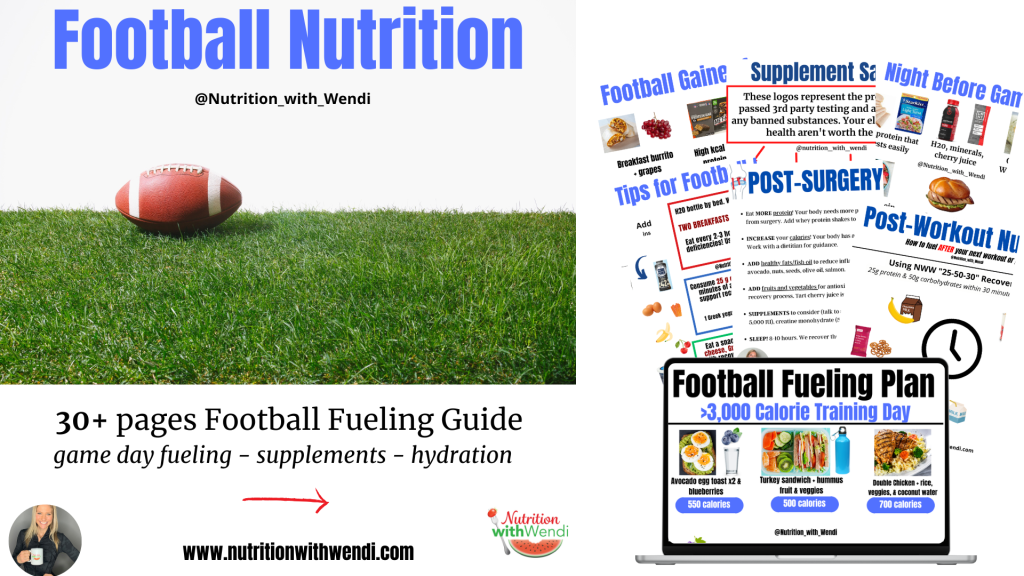
Here’s a look at a sample training day fueling plan for a 190-lb (86-kg) college wide receiver. Download HERE
Football macros:
- Carbs: 4–6g/kg/day 340–515g/day
- Protein: 1.6–2.2g/kg/day 140–190g/day
- Fats: 1g/kg/day 75–90g/day
- Calories: 3,500–4,500/day based on training and season
See sample menus for football HERE.
Sample Speed and Strength Nutrition Plan
Pre-Practice (2 Hours Before)
- 2 whole eggs + 4 egg whites
- Greek yogurt + berries + honey
- 16–20 oz water/coconut H20
Why it matters: Pre-fueling with carbs and protein supports energy, focus, and neuromuscular control during training.
During Practice
- Sports drink or electrolytes
- Watermelon, applesauce or pretzels *See more recommendations here
Maintaining energy mid-practice supports consistent performance and better skill execution.
Post-Practice (within 30–45 min)
- Recovery shake with 40g protein + 60–80g carbs
(Example: whey protein + banana + oats + 5-7g of creatine monohydrate + milk) More tips here. See the supplement stack Wendi recommends HERE. - OR: Turkey sandwich + fruit + chocolate milk
Recovery starts the second practice ends.
The 3:1 ratio of carbs to protein replenishes glycogen and kickstarts muscle repair.
Lunch
- Grilled chicken or steak bowl with rice/quinoa + veggies + olive oil
- Cottage cheese bowl + pineapple + jerky
Snack
- Jerky or Tuna + orange slices + cucumbers
- Carrots + hummus + kiwi slices + Core Power protein shake
Dinner
- Salmon or lean ground beef
- Sweet potatoes or rice
- Avocado + steamed veggies + side of blackberries
Evening Snack
- Cottage cheese + granola + cherries
- OR casein shake + almond butter + cherry juice
Casein protein and cherry juice supports overnight muscle repair and growth.
Key Takeaways for Wide Receivers
- Carbs fuel the sprint.
You can’t be fast on an empty tank. Prioritize carbs before and after practice. Carbs also lower risk of muscle cramping. Avoid game day muscle cramping tips. - Protein builds power.
Spread intake throughout the day—don’t just load up at dinner. See what supplements Wend recommends HERE. - Recovery = performance.
You don’t get stronger during workouts. You get stronger when you recover well. 3 tips for recovery! - Don’t wait to eat or hydrate!
Eat to train, not train to eat. Delayed fueling means delayed recovery. Dehydration symptoms - Sleep is critical to success. Never stay up late for something you would not get up early for! How much sleep do athletes need?
Final Thoughts
Speed, agility, and performance don’t come from talent alone. They come from a disciplined lifestyle that includes intentional, evidence-based fueling. If you’re a wide receiver looking to separate yourself on the depth chart, start by dominating your plate—then dominate the field. It takes what it takes!
See testimonials and success from our coaching and education!
If you want a customized fueling plan for your position, schedule, and body comp goals, or education for your athletes get in touch with us today! Check out my fueling the high school football athlete blog here!

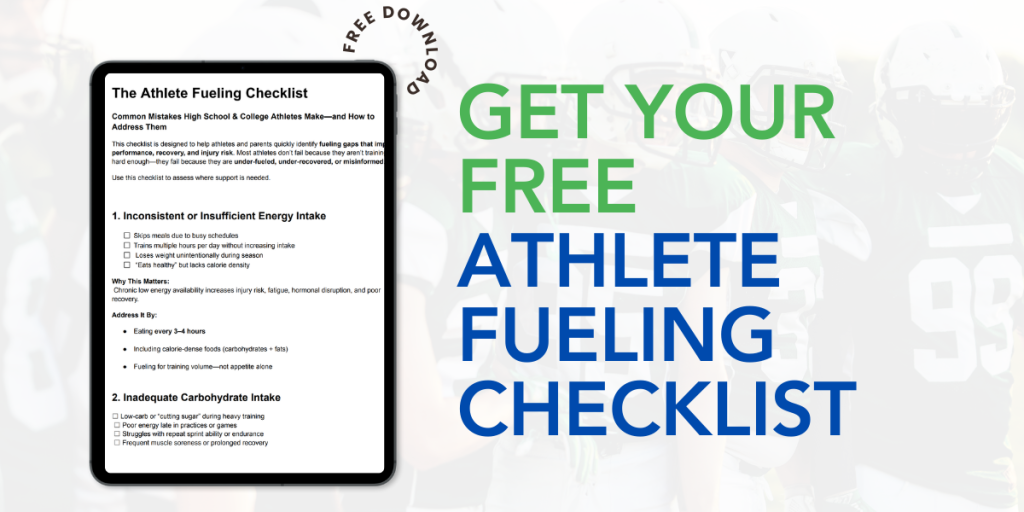
 Under-fueling without realizing it