
Many athletes turn to energy drinks for a quick boost before training or competition. While they may provide short-term stimulation, they often contain high levels of caffeine, added sugars, and artificial ingredients that can negatively impact performance, recovery, and long-term health. See practical nutrition tips for young student athletes HERE.
Caffeine has no place in an adolescent’s diet. A 2018 report stated that greater than 40% of American teens surveyed had consumed an energy drink within the past three months. Several emergency visits have occurred due to energy drink consumption among teens between the ages of 12-17. The American Academy of Pediatrics has concluded that energy drinks are “not appropriate for children and adolescents, and should never be consumed.” Caffeine can negatively impact sleep, anxiety levels and also impair appetite.
REASONS ADULTS SHOULD AVOID ENERGY DRINKS
Top 5 Reasons Teens and Student Athletes Should Avoid Energy Drinks
1. Excessive caffeine disrupts developing systems
Energy drinks often contain high doses of caffeine that overstimulate the nervous system especially in youth athletes.
This can lead to:
- Increased heart rate and blood pressure
- Anxiety, jitters, and poor focus
- Dependency on stimulants for performance
Bottom line: Young athletes don’t need stimulants—they need proper fueling.
2. Sleep disruption = poor performance and recovery
Caffeine can stay in the body for 6–8+ hours, interfering with sleep quality.
Poor sleep impacts:
- Muscle recovery
- Hormonal balance (growth, testosterone, cortisol)
- Reaction time and performance
No recovery = no progress.
3. Increased risk of dehydration
Energy drinks are often used instead of water, not alongside it.
For athletes, this can:
- Worsen hydration status
- Increase cramping risk
- Reduce endurance and output
Hydration is foundational—not optional.
4. Hidden ingredients with little regulation
Many energy drinks include:
- Stimulants like guarana and taurine
- Added sugars or artificial sweeteners
- Proprietary blends with unclear dosing
These products are not designed for adolescent athletes, and long-term effects are not well studied.
5. Creates reliance on shortcuts instead of habits
This is the biggest issue. Energy drinks teach athletes: “I need something external to perform.”
Instead of focusing on the fundamentals for fueling athletic performance:
- Consistent nutrition habits
- Proper pre-training fueling
- Discipline and confidence
- Quality sleep routines
Real performance comes from preparation—not a can.
Better Pre-Workout Fuel for Athletes
Instead of energy drinks, focus on real food that provides sustained energy.
Prioritize carbohydrates (your body’s main fuel)
- Banana, berries, applesauce
- Sweet potatoes
- Pretzels or toast
- Honey or dates for quick energy
Include high-quality protein
Protein supports muscle repair and growth:
- Eggs
- Greek yogurt
- Lean meats
- Beans or tofu
Hydrate properly
- Water should always be the foundation
- Add electrolytes for long or intense sessions
- Try coconut water or a pinch of sea salt in water
Simple pre-workout snack ideas
- Banana + Greek yogurt
- Smoothie with berries + protein
- Applesauce + pretzels
- Toast + honey
Post-Workout Recovery Matters
Recovery is where progress happens. Within 30–60 minutes after training, aim for:
- Protein + carbohydrates
- 10-20 oz of fluid
- 5-7 g of creatine monohydrate
- See my post-workout recovery tips!
Examples:
- Chocolate milk
- Turkey sandwich + fruit
- Protein smoothie + banana
Whole foods + proper sleep wins! Low hanging fruit should be your focus.
Energy drinks may seem like a quick fix but they do more harm than good for young athletes. For better performance, recovery, and long-term health, focus on:
- Consistent nutrition
- Proper hydration
- Quality sleep
- Structured fueling routines
Athletes who fuel their bodies the right way will always have the competitive edge.
How to actually fuel your workouts and training:
https://nutritionwithwendi.com/blog/nutrient-timing-for-athletes/…
What to eat before workouts:
https://nutritionwithwendi.com/blog/what-to-eat-before-your-workout/…
What to eat for breakfast on game day:

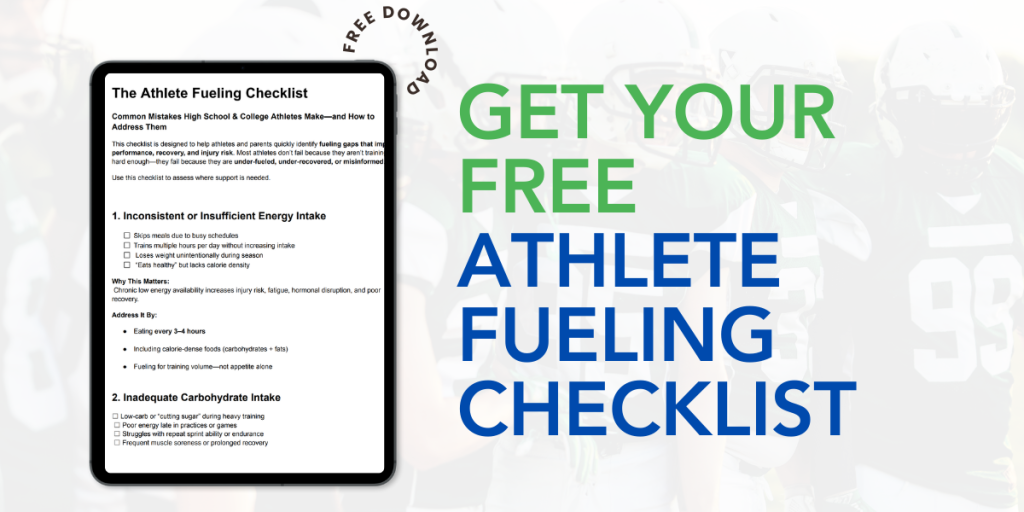
 Under-fueling without realizing it