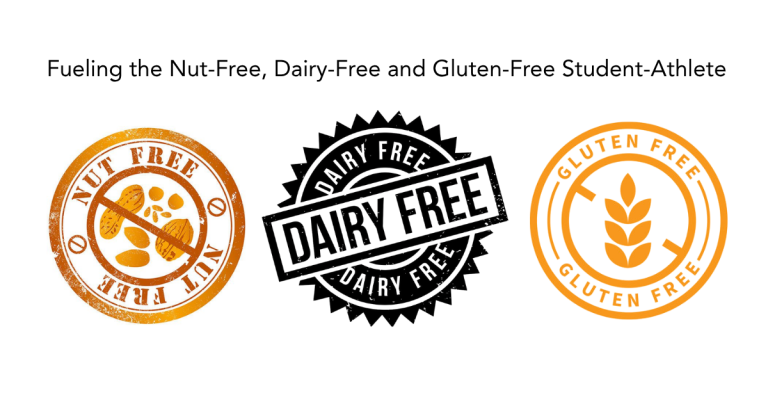

Supporting young athletes goes beyond practice and training – it starts with proper nutrition. But what if your student-athlete can’t eat common foods like dairy, nuts or gluten? Whether due to food allergies, intolerances, or medical conditions like celiac disease, these dietary restrictions can complicate an already demanding fueling strategy.
If you’re managing one or more of these allergens, you might wonder: Are they getting enough protein? What snacks are safe? Will their performance suffer? These are all valid concerns. Unfortunately, many myths persist—like the idea that athletes with dietary restrictions are automatically at a disadvantage. The truth is, with the right guidance, a well-balanced, allergen-safe nutrition plan can fully support growth, recovery, and peak performance. No athlete should feel excluded because of what they can—or cannot—eat!
Let’s explore how to confidently fuel these determined young athletes, starting with the basics:
Nutrition Breakdown
All student-athletes need a well-balanced diet to meet their energy needs, support growth, and promote recovery. Here’s what their plate should include:
- Carbohydrates: The body and brain’s primary source of energy – especially critical before and after practice or games. Whole grains, fruits, and starchy vegetables deliver the fuel muscles need to perform and the brain needs to stay sharp.
- Protein: Essential for muscle repair and recovery. Aim for high-quality sources like lean meats, eggs, legumes, seeds (if tolerated), and soy-based options.
- Healthy fats: Important for brain function and vitamin absorption. Sources like olive oil, avocado, and seeds are vital parts of any athlete’s diet.
- Hydration: Water supports every body function-from regulating temperature to aiding muscle contractions. Encourage athletes to drink regularly throughout the day (aim for about 100oz or more), not just during practice. Include electrolyte-rich options when sweating heavily or in hot conditions.
For athletes avoiding dairy, nuts, and gluten, it can be more challenging to get certain key micronutrients- such as calcium, vitamin D, iron, zinc, and B vitamins- through food alone. These nutrients are essential for bone health, energy production, and a strong immune system. To help bridge the gap, focus on fortified dairy alternatives, gluten-free whole grains, and a diverse range of fruits and vegetables.
Tips for Choosing Allergy-Free Snacks
Navigating food allergies can feel overwhelming, but with the right strategies, you can fuel safely and perform at your best:
- Always read food labels carefully—look for mentions of dairy, nuts, gluten, and possible cross-contamination.
- Clean all surfaces and utensils thoroughly, and consider using separate prep tools and containers for allergen-free foods.
- Communicate your needs clearly with school staff, coaches, and your sports dietitian.
- Bring your own safe snacks and meals to avoid exposure to allergens.
With careful planning, you can stay healthy and perform at your best. For more tips on reading food labels, read here.
Smart Carbohydrates for the Gluten-Free Athlete
Avoiding gluten doesn’t mean cutting out carbohydrates—carbs are essential for energy, endurance, and recovery. Student-athletes can fuel their training and performance by focusing on naturally gluten-free sources such as:
- Quinoa, Rice, Legumes (chickpeas, beans, lentils)
- Potatoes/Sweet potatoes
- Certified GF Oats
- Fresh and dried fruits
- Starchy vegetables (e.g., corn, peas, squash)
- Gluten-free cereals and granolas made from oats, corn, or rice
- Gluten-free snack bars (like select RXBAR, Clif Bars, KIND Healthy Grains Bars, MadeGood and GoMacro Bars)
Always check products for a certified gluten-free label to avoid hidden sources of gluten. See our recommended gluten-free staples and other fueling tips HERE.
Recovery Nutrition: No Dairy, No Nuts? No Problem.
For athletes, getting enough protein is essential for muscle repair, recovery, and performance. Whole food protein sources are ideal, as they provide a more complete nutrient and amino acid profile than most supplements. For those avoiding dairy and nuts, excellent animal-based options include lean meats, poultry, fish, and eggs. Other plant-based protein-rich options athletes can benefit from include soy (if tolerated), lentils, beans, edamame, and tofu.
That said, post-workout convenience matters-especially within the critical 30- to 60- minute recovery window. In these cases, a clean protein supplement can be beneficial. When choosing a protein powder be sure to look for products that are NSF Certified for Sport to ensure quality, safety, and label accuracy.
Some trusted allergen-friendly plant-based protein options include:
- Garden of Life Sport Organic plant-based powder
- Vega Sport Premium protein powder
- Momentous Protein powder *Code WendiIrlbeck saves you 15%
- Plant-based protein bars
Additional dairy-free and nut-free post-recovery and snack options can be found HERE.
Healthy Fat Alternatives for the Nut-Free Athlete
For athletes with nut allergies, getting enough healthy fats is still essential- they support vitamin absorption, hormone balance, brain function and recovery. Omega-3 fatty acids, in particular, reduce inflammation, aid in muscle repair, reduce soreness, and improve endurance.
Nut-free sources of healthy fats and omega-3s include:
- Fatty fish (salmon, tuna, sardines)
- Avocadoes
- Olive oil and avocado oil
- Chia seeds, flaxseeds and hemp seeds
More anti-inflammatory recommendations can be found HERE.

Allergen-Free Sample Fueling Plan | |
7:30am Breakfast | Egg omelet with spinach and tomatoes Avocado Potato hash Fruit |
AM Snack | Apple slices + sunbutter |
12pm Lunch | 2 gluten-free tortilla wraps with deli turkey, hummus, lettuce and tomato Roasted chickpea puffs Grapes |
3pm Pre-Practice Snack | Applesauce + jerky stick |
Practice @ 4:30pm | |
6:30pm Post-Practice Snack | Plant-based protein fruit smoothie |
8pm Dinner | Grilled salmon Rice Black beans Roasted vegetables |
PM Snack *optional | Chia pudding with coconut milk & berries |
Tips for Parents & Coaches
Clear communication and proactive planning keep student-athletes safe and fueled:
- Gather allergy information and emergency contacts at the start of the season.
- Ensure extra, clearly labeled, up-to-date EpiPens are accessible during practices and games.
- Train coaches and staff to recognize allergic reactions and respond appropriately.
- Offer allergy-safe meal and snack options for team events and travel.
- Create an inclusive environment where all athletes feel supported.
Conclusion
Managing food allergies and dietary restrictions as a student-athlete can feel challenging, but it doesn’t have to be a limitation. With thoughtful planning, teamwork, and smart choices, peak performance is absolutely within reach. Every young athlete deserves to be properly fueled and supported, so they can pursue their passion for the game- without compromise.
For more guidance:
https://www.foodallergyawareness.org/

Wendi A. Irlbeck, MS, RDN, LD, CISSN
*Get in touch with Wendi for a team talk or partnership
*Apply for Coaching or enroll to our elite membership
* Check our our health and performance products here!
 Under-fueling without realizing it